
role of adhesive in flex circuit bonding
Adhesives play a crucial role in flex circuit bonding, providing the necessary mechanical and electrical connections between flexible substrates, components, or rigid boards. In flexible circuit technology, where materials need to bend, fold, or twist without compromising performance, the adhesive acts as a critical bonding agent that maintains the structural integrity of the assembly.
Flexible circuits are used in various applications, including consumer electronics, medical devices, automotive systems, and aerospace technology, where reliability, durability, and miniaturization are key requirements. The adhesive ensures the proper attachment of different layers in the flex circuit, helping to achieve the desired electrical connectivity while allowing for flexibility.
The primary role of the adhesive in flex circuit bonding is to hold together multiple layers of the flexible substrate, typically made of polyimide or polyester, with conductive elements like copper traces. This layering forms the essential structure of the flex circuit, where the adhesive bonds the substrate to the conductive layers and any protective coverings, such as a coverlay or a flexible solder mask.
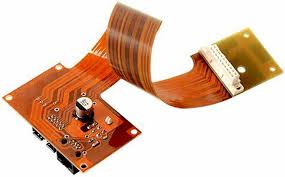
What is the role of adhesive in flex circuit bonding?
The adhesive used in this process must have specific properties, such as thermal stability, flexibility, chemical resistance, and low outgassing, to ensure that the circuit performs optimally in diverse environments. Depending on the application’s temperature and mechanical requirements, different adhesive types, such as acrylic, epoxy, or pressure-sensitive adhesives, may be used.
In addition to mechanical bonding, adhesives in flex circuit technology contribute to electrical performance by ensuring consistent and reliable contact between conductive elements. This is especially important in applications requiring fine pitch connections or high-density interconnections, where even minor disruptions can lead to signal loss or electrical failure.
The adhesive minimizes the risk of delamination and ensures that the copper traces remain securely attached to the substrate during bending or flexing, which is a common requirement in wearable electronics or flexible medical devices. In rigid-flex circuit assemblies, where flexible and rigid sections are combined, the adhesive provides a transition point that can accommodate mechanical stress and maintain electrical continuity.
The choice of adhesive also affects the manufacturing process of flex circuits. It influences factors such as lamination temperature, pressure, curing time, and overall assembly thickness. The adhesive must bond effectively without causing warping or deformation of the thin flexible substrates. For instance, thermosetting adhesives like epoxy require heat to cure and form a rigid bond, making them suitable for applications that demand high heat resistance. On the other hand, pressure-sensitive adhesives allow for bonding without heat, offering a simpler process for some applications where lower temperature requirements are needed.
Furthermore, adhesives can offer additional functionality to flex circuits by providing insulation or protective properties. For example, some adhesives have flame-retardant properties or can act as a moisture barrier, enhancing the circuit’s durability in harsh environmental conditions. In medical applications, biocompatible adhesives are used to bond circuits in wearable health monitors, ensuring they are safe for skin contact. The adhesive selection process must consider these factors to ensure the flex circuit meets all application-specific requirements.
The role of adhesive in flex circuit bonding extends beyond just attaching layers; it also impacts the reliability, longevity, and overall performance of the flexible circuit. Choosing the right adhesive type and formulation is critical for ensuring that the circuit can withstand mechanical stresses, thermal cycling, and chemical exposure throughout its operational life. As the demand for flexible electronics continues to grow, advancements in adhesive technology will play a significant role in enabling new applications and improving existing solutions. The adhesive’s ability to provide a durable bond, ensure electrical integrity, and enhance environmental resistance remains a key aspect of successful flex circuit design and manufacturing.
