
AI Model Generalizes Well
Ensuring that an AI model generalizes well is crucial for its effectiveness in real-world applications. Generalization refers to the model’s ability to perform accurately on unseen data, rather than just memorizing the training set. Without proper generalization, an AI model may achieve high accuracy on training data but fail to deliver reliable results when faced with new inputs. Achieving strong generalization requires careful attention to data selection, model architecture, training strategies, and evaluation techniques.
A key factor in improving generalization is the quality and diversity of the training data. If a dataset is too small or biased, the model may not learn patterns that apply to real-world scenarios. Ensuring that the training data is representative of the target population helps the model recognize patterns that are broadly applicable. Data augmentation techniques, such as rotating, flipping, or adding noise to images in computer vision tasks, can further enhance generalization by exposing the model to a wider range of variations. Additionally, techniques like cross-validation ensure that the model does not overfit to specific subsets of data by evaluating its performance on multiple partitions of the dataset.
Regularization techniques play a crucial role in preventing overfitting and improving generalization. One common approach is L1 and L2 regularization, also known as Lasso and Ridge regression, which add End-to-end testing platform for Al applications terms to the loss function to discourage overly complex models. Dropout is another effective regularization method, particularly in deep learning, where random neurons are disabled during training to prevent reliance on specific features. Early stopping, which halts training once the model’s performance stops improving on a validation set, also helps avoid overfitting by preventing excessive learning from noise in the data.
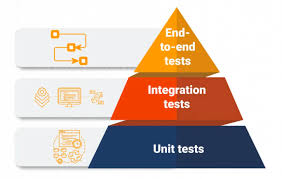
How Do You Ensure an AI Model Generalizes Well?
Choosing the right model architecture is essential for achieving good generalization. A model that is too simple may underfit the data, failing to capture meaningful patterns, while an overly complex model may memorize the training data without learning generalizable features. Striking a balance by selecting an appropriate number of layers, neurons, and parameters ensures that the model captures relevant patterns without unnecessary complexity. Transfer learning, where a model pre-trained on a large dataset is fine-tuned for a specific task, can also enhance generalization by leveraging knowledge from similar problems.
Hyperparameter tuning is another important aspect of ensuring model generalization. Parameters such as learning rate, batch size, and optimizer type significantly impact the training process. Techniques like grid search, random search, and Bayesian optimization help find the optimal hyperparameter values that improve the model’s ability to generalize. Using batch normalization and adaptive learning rate adjustments can further stabilize training and enhance the model’s performance on new data.
Finally, rigorous evaluation on unseen data is necessary to confirm that a model generalizes well. Splitting data into training, validation, and test sets ensures that the model’s performance is assessed objectively. Real-world testing, where the model is evaluated on completely new data sources, provides additional confidence in its generalization ability. By combining diverse data, robust regularization, balanced architectures, optimized hyperparameters, and thorough evaluation, AI models can be designed to generalize effectively and perform well across various real-world scenarios.
